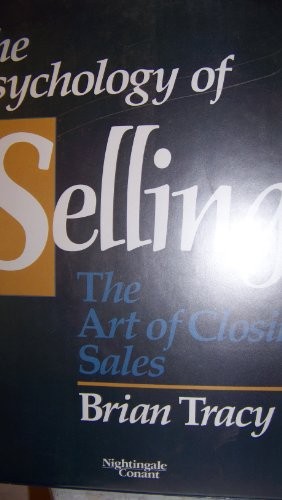
One of the best-selling sales training programmes ever produced, Tracy's book focuses as much on the internal psychology of selling — self-image, belief, handling rejection — as on external technique, arguing that mindset is frequently the actual bottleneck on sales performance, not skill.
The winning edge, and why it's thinner than you think
Tracy opens with the observation that runs underneath everything else in the book: on any sales floor, a small minority of people earn most of the money, and the gap in actual ability between them and everyone else is nowhere near as wide as the gap in income. He calls this the winning edge — small differences in competence producing enormous differences in results, the way a racehorse that wins by a nose takes many times the prize money of the horse a head behind it. The horse isn't twice as fast. It's fractionally faster at the only moment that gets measured.
This is a more optimistic argument than it first appears, and it sets up the rest of the book. You don't have to be twice as good as the competition; you have to be slightly better at the handful of things that decide the outcome, and you have to be that way consistently. It also explains why Tracy spends so much of the book on what most sales manuals treat as soft padding. If the margin between an average year and an exceptional one is genuinely that thin, then nerve, self-belief and the willingness to make one more call before going home are not warm-up material. They are the margin.
The self-image ceiling
Tracy's foundational claim, borrowed from broader self-help psychology and applied specifically to sales, is that salespeople perform roughly in line with how they privately see themselves, more or less regardless of the technique available to them. Someone who quietly believes they're a 70-percent-of-target person will, in Tracy's account, find ways to stop short of 100 even when they know exactly what to do — missing the follow-up, softening the ask, finding admin that urgently needs doing at 4pm on a Thursday. Self-image works like a thermostat rather than a ceiling imposed from outside: exceed your internal setting and you unconsciously cool off, fall below it and you scramble to recover.
The evidence for this is anecdotal rather than experimental, and Tracy states it with far more confidence than the underlying research supports. But most people who have managed salespeople recognise the pattern he's describing, which is why the idea has survived: the person who has a huge month and then goes quiet for three weeks isn't being lazy, they're returning to their setting. Tracy's practical response is to work on the setting directly — deliberate rehearsal of how a top performer in your position behaves, and repeated exposure to situations slightly beyond what feels comfortable, so that the comfort zone moves rather than being periodically overridden by willpower. Raise the thermostat first, he argues, and technique compounds on top of it. Layer technique onto an unchanged thermostat and you get a very well-trained person hitting the same number.
Buying is emotional; the logic arrives afterwards
The middle of the book is Tracy's actual sales method, and its organising claim is that decisions get made emotionally and then justified rationally — so a presentation aimed purely at the rational case is aimed at the wrong part of the process. What he draws from that is not manipulation but diagnosis. The two great obstacles in any sale are the buyer's fear of making a mistake and the seller's fear of hearing no, and both are reduced by the same thing: enough trust and enough understanding of the situation that the decision stops feeling like a gamble.
In practice this means the salesperson talks far less than they expect to. Tracy's line is that the person asking the questions is the one in control of the conversation, and he pushes hard on the shift from presenting to diagnosing — establishing what the buyer's situation actually is, what it's costing them, and what a fixed version of it would be worth, before offering anything. He frames the ideal posture as friend, adviser and teacher rather than vendor: someone the buyer would be comfortable getting a straight answer from even if there were no sale in it. That's the point where the book stops being 1990s motivational material and starts sounding like modern consultative selling, and it's the part that has aged best.
Two related ideas run alongside it. The first is positioning: what customers say about you when you aren't in the room is, in Tracy's account, doing more selling than anything you say when you are, so the deliberate question is what you want that sentence to be and whether your actual conduct earns it. The second is his treatment of resistance. Objections, he argues, are normal, universal and usually a sign of engagement rather than refusal — the buyer who says nothing is the one you've lost. The practical instruction is to collect the handful of objections you actually hear, prepare a straight answer to each, and then, having answered, ask for the order plainly instead of waiting to be invited. A great deal of small business selling fails at precisely that last step: the work is done, the case is made, and nobody ever asks.
Rejection, call reluctance and the law of averages
Tracy treats fear of rejection and call reluctance as the single most common and least discussed barrier to sales performance — more limiting, in his account, than any gap in method. His response is deliberately mechanical rather than therapeutic, and it's the most useful part of the book for anyone who hates prospecting. Know your ratios: how many conversations produce a meeting, how many meetings produce a proposal, how many proposals produce a sale. Once you know them, every no has a calculable value, because it moves you one step closer to the yes the ratio guarantees is coming.
The reframe underneath it is simple and holds up: nobody on a cold call is rejecting you, because they don't know you. They are declining a proposition they have had roughly four seconds to consider, usually while doing something else. Separating self-worth from any individual outcome is what lets a salesperson make the next call at full strength rather than at eighty percent, and Tracy's argument is that the recovery time between rejections — not the technique on any single call — is what actually separates the top performers from the rest.
Goals, written down, and the compounding of a small daily edge
The final movement of the book leans on a well-worn but genuinely well-evidenced principle: specific, written, deadlined goals outperform vague intentions to sell more or do better, because a specific number is something you can plan backwards from and a vague one isn't. Tracy pushes readers through the arithmetic rather than leaving it as an aside — start with the income you want, work back through your own ratios to the number of conversations that implies, divide by working weeks, and you have a weekly activity target that doesn't depend on motivation to survive contact with a bad Monday.
He closes with his compounding argument, which he states as arithmetic: improve by a tenth of one percent a day and, on his figures, you get roughly a quarter better over a year and several times better over a decade. The precise numbers are his own and shouldn't be treated as evidence of anything. The underlying point is sound and matches what anyone who has watched a long sales career knows to be true — thirty minutes of reading or practice every working day for ten years produces a completely different person from the one who cycles between motivational sprints and long flat periods. It's the same compounding logic that runs through the whole personal-development genre, applied specifically to the craft of selling.
Key lessons
- Self-image directly affects sales performance — salespeople tend to sell roughly in line with how they see themselves.
- Fear of rejection and fear of failure are the most common invisible ceilings on sales performance, more than lack of technique.
- Setting clear, specific goals measurably improves sales results compared with vague intentions.
- Continuous self-development compounds — a small daily improvement in skill or knowledge adds up significantly over a career.
For a lot of salespeople, the real barrier isn't technique — it's the internal psychology of confidence, self-image and handling rejection, which is trainable just like any other skill.
What this means for a UK small business
The mindset half of this book is aimed squarely at a very British problem: owners who quietly avoid outbound sales because it feels pushy, and then describe that avoidance as a personality trait rather than a decision. Tracy would call it a self-image problem in fancy dress. Separating a no from personal rejection is a genuinely useful reframe for anyone doing their own new-business calls without ever having been trained to sell.
The ratio arithmetic is the bit worth doing this week, and it takes twenty minutes. Say a small agency wants £120,000 of new fees next year and its average new client is worth £4,000 — that's 30 clients. If roughly one in three proposals converts, that's 90 proposals; if one meeting in two produces a proposal, 180 meetings; if one conversation in five produces a meeting, around 900 conversations, or about 18 a week. Those figures are illustrative, and your own ratios will differ — but the exercise turns an unmanageable ambition into a weekly number you can actually miss or hit, which is the whole point. Write it down, put it where you'll see it, and the vague hope that next quarter will be better than this one stops being your sales plan.
What’s aged well
The mindset-focused core holds up, though some examples and delivery style feel dated.
What feels outdated
The tone is very much classic 1980s-90s American sales-training style, which won't suit every reader.
Where it falls short
The tone is unmistakably 1980s-90s American motivational sales training — confident, repetitive, and thin on the situations where the psychology genuinely differs by sector or product. More seriously, the evidence base is largely assertion: the self-image material sits uncomfortably close to law-of-attraction thinking, and the headline figures Tracy quotes for income distribution and daily improvement are stated as fact without sourcing, so treat them as rhetorical devices rather than data. The book also overlaps heavily with the rest of Tracy's catalogue, so reading three of his titles gets you perhaps one and a half books' worth of ideas. Pair it with a modern methodology book for the technique it leaves thin.
The Business Stuff verdict
Useful for the mindset material specifically, best paired with a more modern methodology book for technique.
Three things to actually do after reading it
- Set one specific, written sales goal for this month rather than a vague intention to 'sell more'.
- Identify the specific situation that triggers your own call reluctance, and do it first each day rather than last.
- Commit to one small, consistent skill-development habit — reading or practice — every working day.
If you liked this, read next
Five similar books
- How to Master the Art of Selling (Tom Hopkins)
- Eat That Frog! (Brian Tracy)
- To Sell Is Human (Daniel Pink)
- SPIN Selling (Neil Rackham)
- Exactly What to Say (Phil M. Jones)
Common questions
Is The Psychology of Selling still worth reading?
Yes, but for one specific thing: the mindset material. The sections on self-image, call reluctance and separating your self-worth from a no are the reason people still recommend it forty years on, and nothing about them has dated. The technique chapters are a different story — they predate everything we now understand about longer, multi-stakeholder buying processes, and they read like a training course from 1988 because that is essentially what they are. Treat it as half a book that is genuinely useful and half a book that has been superseded, and pair it with something modern for method. If you only ever read one Tracy title, this is the one.
How is it different from Brian Tracy's other sales books?
There is a lot of overlap, and that is worth knowing before you buy three of them. Tracy has written extensively on selling, goal-setting and time management, and the same core material — the winning edge, written goals, compounding daily improvement — reappears across the catalogue in different arrangements. The Psychology of Selling is the one where the internal, psychological argument is the main event rather than a chapter, which is why it is the one usually recommended. Reading it plus one of his time-management titles gets you most of what he has to say. Reading four of them gets you the same ideas a fourth time.
Will this help if I hate cold calling?
It is one of the few sales books that treats that as a real problem rather than a character flaw, so probably yes. Tracy's argument is that call reluctance is fear of rejection wearing a disguise, and that the people who prospect consistently are not braver, they have just stopped reading a no as a verdict on themselves. His practical answer is arithmetic: work out how many conversations produce a meeting and how many meetings produce a sale, and every no becomes a step you had to take rather than a failure. That reframe genuinely helps. What the book will not do is give you a modern script — for that you want a current prospecting title alongside it.
Do I need sales experience to get value from it?
No, and inexperienced readers often get more from it than seasoned ones. It assumes nothing, moves slowly, and spends its energy on the parts that stop beginners dead — nerve, rejection, and not knowing how to ask for the order. That makes it a reasonable first sales book for an owner who has never been trained to sell and has been quietly avoiding it. Experienced salespeople will find the technique chapters basic and the tone wearing, and are better served treating it as a mindset refresher than a methodology. The difficulty rating is deliberately low: this is an easy read that repeats itself, not a demanding one.