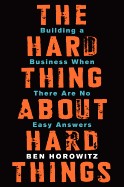
Horowitz, drawing on his own experience running a software company through the dot-com crash and multiple near-death moments, rejects the genre of business books that only cover the easy, formulaic decisions. Instead he tackles the genuinely hard things: how to lay people off with dignity, how to fire an executive friend, how to manage your own psychology when the business is failing publicly. It's blunt, occasionally profane, and unusually honest for the genre.
The struggle is the subject
Horowitz's opening move is to reject the genre he is writing in. Most business books, he argues, offer a repeatable process for the straightforward part of a chief executive's job and go quiet on the rest — the decisions with no textbook answer, made with incomplete information, under time pressure, with the company's survival and other people's livelihoods attached. There is no recipe for those, so books skip them, which leaves the people living through them convinced they are uniquely bad at the job.
His credentials for writing about it are the point. Loudcloud, the company he co-founded with Marc Andreessen, launched into the dot-com collapse, went public in 2001 in a market with no appetite for it, sold its core managed-services business to EDS while the shares traded around a dollar, reinvented itself as the software company Opsware, and was eventually sold to Hewlett-Packard in 2007 for $1.6 billion. The book is written from inside that sequence rather than from the far side of it, which is why the chapter he calls The Struggle — on the psychological experience of watching something you built fail publicly, in front of people who trusted you — reads unlike anything else in the genre. His only real advice about it is that it is survivable, that the people who make it are not the ones who never wobbled, and that you should not add self-loathing to the pile of problems you are already carrying.
The mechanics of doing hard things properly
Where the book becomes genuinely instructional is in the specifics of executing the decisions everyone avoids. On redundancies his rules are precise and hard-won: move fast once the decision is made, because the rumour will get there before you do and delay only lets people negotiate with themselves; be clear that the company failed rather than the individuals, because the alternative sends people away carrying blame that is not theirs; have managers do it for their own people rather than outsourcing it to HR, because delegating it says you were not prepared to look them in the eye; and remember that the audience is not only the people leaving but the people staying, who will judge the company's character entirely by how it was done.
On demoting or replacing an executive — often a friend, often someone who was genuinely excellent at an earlier size of company — he is equally unsentimental. The company outgrowing someone is not a moral failure on their part, but pretending otherwise, or leaving them in post out of loyalty, damages everyone beneath them and eventually them too. His related warning about hiring senior people from large companies is one of the most practical in the book: a superb executive from a big firm may have spent a decade optimising an existing machine and have no idea how to build one from nothing, and the mismatch shows up as an inability to generate work rather than as any lack of talent.
There is a genuine tactical gem in the Freaky Friday manoeuvre — two department heads locked in a destructive feud, so Horowitz swapped their jobs and let each inherit the other's constraints. It is not generalisable advice so much as a demonstration of the mode the book teaches: when the standard playbook has no answer, invent something specific to the situation and own the consequences.
Management debt, and why good organisations feel boring
The concept most worth stealing is management debt: the organisational equivalent of technical debt, incurred every time you take an expedient shortcut with people and defer the real cost. Horowitz's examples are painfully recognisable — two people effectively doing the same job because you could not face choosing between them; a large counter-offer to someone threatening to leave, which teaches everyone that threatening to leave is how you get a pay rise; no performance-management process at all, because the company is small and everyone gets on. Each is cheap today and expensive later, and the interest is paid in politics.
It is worth putting illustrative numbers on one of those, because the cost is invisible until it is not. Suppose a good developer or senior technician on £45,000 threatens to leave and you settle it with a £5,000 rise on the spot. That is £5,000 a year plus employer National Insurance, so call it £5,700, and it is permanent. Within a few months two colleagues have worked out how the rise was obtained and ask the same question, and you either match them — another £11,400 a year of unbudgeted cost — or you confirm that the only reliable route to a pay rise here is a resignation threat. The debt was taken out in a ten-minute conversation and is repaid every payroll run for years.
His definition of a good organisation is deliberately unglamorous: one where people can get on with their work and are reasonably confident that doing it well will be noticed and will matter. A bad one is where energy goes into boundary disputes, into working out who really decides, and into managing perceptions rather than producing anything. Politics, in his framing, is not caused by political people; it is caused by leaders who inadvertently reward political behaviour — by responding to the loudest complaint, by promoting whoever lobbied hardest, by leaving decision rights vague.
The same section contains his argument for training, borrowed openly from Andy Grove: it is among the highest-leverage things a manager does, it is nearly always the first thing dropped when the business gets busy, and skipping it does not mean people go untrained — it means they train themselves, badly and inconsistently, on whatever version of the job they invented.
His treatment of feedback and one-to-ones is similarly practical. The one-to-one belongs to the employee, not the manager: it is their agenda, and the manager's job is mostly to shut up and ask the questions that get past the status update. Feedback should be specific, frequent enough to be unremarkable, and delivered without the softening sandwich that leaves people unsure whether they have just been praised or warned. And on promotions he flags a trap worth naming — as a company grows, whoever gets promoted defines the standard for that level forever, so a weak promotion permanently lowers the bar rather than costing you one mediocre manager.
Peacetime, wartime, and managing your own head
The peacetime CEO and wartime CEO distinction has escaped the book and become shorthand, usually in a debased form. Horowitz's actual point is narrower and more useful: the two modes call for genuinely different behaviour, and the failure is applying the wrong one. Peacetime — the company has a lead, the market is expanding, the job is to broaden the base — rewards process, consensus, creativity and long-term capability building. Wartime — an existential threat, a collapsing market, a competitor eating you alive — rewards speed, narrow focus and directive decisions taken without waiting for everyone to agree. Leaders who stay in peacetime mode during a crisis dither; leaders stuck in wartime mode during calm micromanage a company that no longer needs it. The skill is recognising which one you are in, and being willing to switch.
Two further principles anchor the book. Lead bullets, not silver ones: when a competitor is beating you on product, there is no clever positioning, no marketing angle and no pivot that substitutes for going away and making the product better — a lesson Horowitz says his own team had to be pushed into accepting. And the one he calls the hardest skill of all, managing your own psychology, on the grounds that a chief executive's visible panic transmits through an organisation faster than any memo, and that the loneliness of the job is not evidence that something has gone wrong. His prioritisation — take care of the people, the products and the profits, in that order — is sequenced deliberately: a mistreated team eventually breaks everything downstream, a poor product makes profit temporary, and profit is the lagging result of the first two rather than a lever you can pull directly.
Key lessons
- There's no formula for the truly hard decisions — layoffs, firing a friend, near-bankruptcy — only principles for handling them with integrity.
- Bad news doesn't improve with age; tell your team the truth about difficult situations promptly and directly.
- 'Take care of the people, the products, and the profits, in that order' — a simple but genuinely tested prioritisation under pressure.
- A CEO's job includes managing their own psychology, because a leader's visible panic spreads through an organisation faster than almost anything else.
- Peacetime and wartime leadership require genuinely different styles — what works when things are stable can actively hurt you during a genuine crisis.
Most leadership advice assumes things are going reasonably well; the moments that actually define a leader are the ones without a formula, and this book is one of the few honest accounts of navigating them.
What this means for a UK small business
The redundancy chapters are the most directly usable material here, but they need a legal overlay. Horowitz's principles — decide and then move fast; be clear the business failed rather than the person; have the actual manager deliver it; protect the dignity of those leaving because those staying are watching — hold in any jurisdiction. UK law then imposes its own process on top: proper consultation, fair and objective selection criteria, notice periods, statutory redundancy pay for employees with two years' service, and collective consultation obligations once you propose 20 or more redundancies at one establishment. Get the employment-law process right, and use Horowitz for how to conduct yourself inside it.
Management debt is the concept most worth applying at UK small-business scale, because owner-managed and family firms accumulate it fastest: the loyal long-server whose role the business has outgrown, two people quietly doing the same job, the rise handed over to stop someone leaving. Each is cheap this month and expensive next year.
And the peacetime/wartime test is a useful diagnostic when a management style that worked last year suddenly feels wrong. A lost anchor client, a cash crunch or a compliance emergency calls for faster and more directive decisions than the consensus-building that works when things are stable — and, just as importantly, a return to consensus once the emergency passes.
What’s aged well
The candour about layoffs, firing friends and crisis leadership remains rare and valuable in the genre, and doesn't feel dated.
What feels outdated
A handful of the specific dot-com-era anecdotes need context for younger readers, but the underlying leadership principles are undated.
Where it falls short
The war stories come from a venture-backed, dot-com-era software company with access to capital markets, and a reader running a café, a building firm or a six-person practice has real translation work to do — much of the drama turns on board dynamics, funding rounds and executive hires that do not exist at that scale.
It is also, by design, a book about surviving crises rather than avoiding them, and offers little on the calmer majority of leadership it explicitly set out to skip. The rap-lyric chapter openings and studied bluntness read as refreshing honesty to some and as posturing to others. And Horowitz is telling his own story: the calls that worked get examined closely, the ones that did not rather less.
The Business Stuff verdict
The most honest book on this list about the genuinely difficult parts of running a business — read it before you need it, not during the crisis.
Three things to actually do after reading it
- Write down the one 'hard thing' you're currently avoiding, and set a date this week to address it directly.
- If a difficult conversation with your team is overdue, deliver it plainly and promptly rather than softening it into ambiguity.
- Check whether your current leadership style matches 'peacetime' or 'wartime' — and whether it matches what the business actually needs right now.
If you liked this, read next
Five similar books
- Shoe Dog (Phil Knight)
- High Output Management (Andy Grove)
- Radical Candor (Kim Scott)
- Only the Paranoid Survive (Andy Grove)
- Principles (Ray Dalio)
Common questions
Is this only relevant if you run a tech startup?
The stories are all venture-backed software: funding rounds, board dynamics, an initial public offering into a collapsing market, executive hires at a scale most readers will never make. But the material that has kept the book in print is not industry-specific. How to make people redundant without destroying the trust of everyone who stays, how to replace a loyal executive the company has outgrown, how to tell whether your organisation's politics are a people problem or a leadership one, and how to manage your own head when the business is in trouble — none of that changes because you run a building firm or a six-person practice. You do have to do the translation work yourself, because Horowitz does not do it for you.
What is management debt?
It is the organisational version of technical debt: an expedient shortcut with people that is cheap today and expensive later, with the interest paid in politics. Horowitz's examples are ordinary and recognisable. Two people effectively doing the same job because you could not face choosing between them. A large counter-offer to someone threatening to leave, which quietly teaches everyone that threatening to leave is how you get a pay rise. No performance-management process at all, because the firm is small and everyone gets on — until the first time someone needs telling that their work is not good enough and there is no established way to do it. Each is avoidable at the time and painful to unwind two years later.
What does the book say about handling redundancies?
Four things, all hard-won. Move fast once the decision is made, because the rumour travels faster than you do and delay only lets people negotiate with themselves. Be explicit that the company failed rather than the individuals, so nobody leaves carrying blame that is not theirs. Have each manager tell their own people rather than handing it to HR, because delegating it says you were not willing to look them in the eye. And remember the real audience is the people staying, who will judge the firm entirely on how it was done. In the UK all of that sits on top of the legal process — proper consultation, objective selection, notice, statutory redundancy pay after two years' service — not instead of it.
How do I tell whether I am in peacetime or wartime?
Wartime is an existential threat: a lost anchor client, a cash crunch with weeks rather than months of runway, a competitor taking your market, a compliance emergency. Peacetime is having a lead and room to broaden it. The distinction matters because the two need opposite behaviour. Peacetime rewards process, consensus and building long-term capability; wartime rewards speed, narrow focus and directive decisions taken without waiting for everyone to agree. The failure Horowitz warns about is applying the wrong one — dithering through a crisis because you are still building consensus, or micromanaging a stable business because you never came out of crisis mode. Naming which one you are in, out loud, is most of the work.