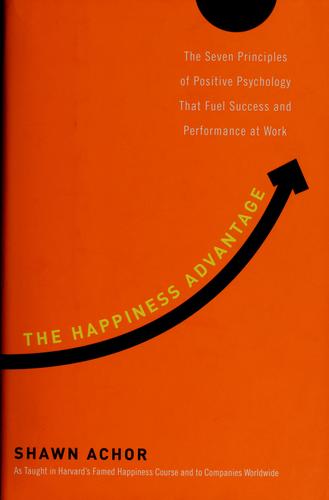
Achor's research argues that the common assumption — work hard, succeed, then be happy — has the causation backwards. Positive mindset actually precedes and predicts better performance, not the other way round, and the book offers specific, testable techniques for building that mindset deliberately.
The formula almost everyone runs is backwards
Most of us carry the same private equation around: work harder, become more successful, and then you'll be happy. Achor spent twelve years at Harvard, much of it teaching one of the university's most heavily subscribed courses, watching extremely capable people run that equation and get nothing back from it. His objection is in two parts, and the first is the more damaging. The formula is broken because the brain moves the finish line. Hit the turnover target and the target becomes a bigger target. Land the client you spent two years chasing and by the following Monday it is simply the new baseline. Happiness in that equation isn't delayed, it's permanently over the horizon, which is why so many owners who genuinely hit their number report feeling almost nothing when they get there.
The second part is the actual argument of the book: the causation runs substantially the other way. A brain in a positive state is measurably better at the things business rewards — spotting patterns, holding more options in view, staying with a problem, recovering from a knock — so mood behaves like an input to performance rather than its reward. Achor's headline figures, drawn from the positive-psychology literature he worked in, put the productivity gap between a positive and a neutral brain at roughly a third, with larger swings again in sales and in the speed and accuracy of expert judgement. Treat those specific numbers with some care, for reasons covered below, but the direction of the finding is the point and it is well enough established to act on.
It's worth being precise about what Achor means by happiness, because the usual objection — I'm not going to stand in a bad month pretending everything's fine — isn't actually an objection to what he's proposing. He uses something closer to the Greek idea of eudaimonia: the sense of moving toward your own potential, of the work going somewhere. That is compatible with a genuinely difficult quarter. It is not compatible with three years of grinding at something you've stopped believing in, which is a more common condition among owner-managers than the cheerful version of this book's cover suggests.
The fulcrum and the lever
Achor borrows Archimedes: give me a lever long enough and a place to stand, and I'll move the world. Your potential is the lever; your mindset is where the fulcrum sits. Shift the fulcrum and the same effort against the same circumstances produces a different amount of force. The study he leans on hardest here is Ellen Langer and Alia Crum's work with hotel housekeepers, half of whom were told that the physical work they already did each day comfortably met the recommended guidelines for exercise. Nothing about the job changed. The informed group's health markers moved anyway over the following weeks. The mechanism is expectation, and it is doing real work rather than merely feeling nice.
The business translation is uncomfortable but direct: how a job is framed before anyone starts changes the output of that job. A team briefed that the next eight weeks are a survival slog will produce survival-slog work. The same team briefed on what specifically is being built and what it will make possible produces something else, from an identical set of hours. This isn't a licence to spin bad news — Achor is careful that the fulcrum has to sit on something true — but the framing is a lever most owners never think to pull, because they assume the facts speak for themselves. They don't. Facts arrive wrapped in whatever interpretation the person delivering them was carrying.
The Tetris Effect and Falling Up
Play enough Tetris and you start seeing stacking shapes everywhere — in supermarket shelves, in cars in a car park, behind your eyelids. The brain has been trained to hunt one specific pattern and it doesn't switch the scan off when the game ends. Achor's application is the most useful idea in the book for anyone whose job involves finding faults. Auditors, quality controllers, compliance people and owner-managers all spend their working lives scanning for what's wrong, get extremely good at it, and then carry the scan home, where it looks like pessimism and is actually a trained skill firing in the wrong context.
This reframes the gratitude habit, which is where a lot of sceptical readers get off the bus. Writing three specific good things from the day isn't an exercise in feeling grateful. It's a scanning drill — it forces the brain to hunt a category of item it doesn't habitually hunt, which is precisely the mechanism that made the problem-scanners so good at problems. Achor's suggested routine is small and concrete: three new gratitudes, one positive experience written up in a couple of sentences, a short burst of exercise, a couple of minutes of breathing, and one deliberate act of kindness — sustained daily for three weeks so it becomes a scan rather than a task.
Falling Up is the companion principle and covers what happens after something goes badly wrong. Achor's claim, drawn from the post-traumatic growth literature, is that setbacks produce three mental paths: back to where you were, further down, or up — meaningfully better off than before because of what the failure taught. Almost nobody takes the third path, and his diagnosis is that they don't take it because they can't see it. The intervention is unglamorous and works: after the loss, write down in plain language what it actually taught you and what you would now do differently, while the detail is still sharp. That is the difference between a bad year that costs you money and a bad year that costs you money and teaches you nothing.
The Zorro Circle, the 20-Second Rule, and the principle everyone skips
The Zorro Circle takes its name from the film, where Don Diego is made to master a small circle drawn on the floor before he is allowed anywhere near the rest of the room. Achor's point is about what happens to the brain under sustained stress: the sense of control collapses, everything starts feeling equally urgent, and the natural response — tackling all of it at once — guarantees that none of it gets finished, which confirms the loss of control and tightens the loop. The way out is to shrink the circle to something you can definitively complete today. For an owner staring at a cash-flow hole, that isn't 'fix cash flow'. It's ring the three largest overdue invoices this morning and get a date out of each of them. Small, contained, finished — then widen.
The 20-Second Rule is the book's most portable idea and the one most likely to still be working for you in a year. Willpower is a poor and depleting mechanism, so the reliable lever is activation energy: the friction between deciding and starting. Achor's own version was moving his guitar out of its case in the cupboard and onto a stand in the middle of the room, and taking the batteries out of the television remote. Twenty seconds of friction removed, twenty seconds added. That is enough to decide most habits, because the decision is made in the first few seconds and not by a sustained act of character. If any of this framework sounds familiar from more recent habit books, that is because this is one of the places the idea entered the mainstream.
The seventh principle, Social Investment, is the one readers skip and the one Achor rates most highly. Under pressure people withdraw: they cancel the coffee, drop out of the peer group, work through lunch, stop returning calls that aren't urgent. His argument is that this is exactly backwards, because the depth of someone's social support is among the strongest predictors of how well they come through a hard stretch. For a business owner the practical version is blunt — the network is the first thing cut in a bad quarter and the thing most worth defending, because it is where the referral, the supplier favour and the honest second opinion all come from at precisely the moment you need them.
Key lessons
- Happiness fuels performance more than performance produces happiness — the common assumption has the order backwards.
- Small, specific gratitude and positive-focus practices measurably shift performance and resilience over time.
- The 20-second rule: making a good habit 20 seconds easier to start (or a bad one 20 seconds harder) meaningfully changes behaviour.
- Social support during stress is one of the strongest predictors of resilience, and worth deliberately investing in.
Waiting for success to make you happy has the causation backwards — a positive mindset, built deliberately now, is what actually drives better performance.
What this means for a UK small business
The reversed-formula argument is worth taking seriously by any owner who has told themselves they'll enjoy the business once it clears £500k, or once the second van is paid off. Achor's case is that the number, once hit, won't deliver what's expected of it, because the mindset that was supposed to arrive with it has to be built independently and in advance. That isn't a reason to stop growing. It's a reason to stop outsourcing your state of mind to a figure on a management account.
The 20-Second Rule is the most immediately usable idea for daily operations, and it costs nothing. Whatever behaviour the business needs more of, take twenty seconds of friction out of it: the receipt-capture app on the phone's home screen rather than four folders deep, the follow-up email template saved as a snippet rather than rewritten each time, the quote form already half-filled with the standard terms. For example, say a two-person trades firm loses an hour a week to reconstructing expenses at month end. At a £45 charge-out rate that's about £2,100 a year of billable time going into a job that friction created. Removing the friction is a cheaper fix than adding discipline.
The social-investment principle also cuts against a fairly British instinct to go quiet when trading gets hard. The month you least want to show your face at the local business breakfast is usually the month it's worth most.
What’s aged well
The core positive-psychology research remains broadly influential, though positive psychology as a field has faced some of the same replication questions common across psychology research.
What feels outdated
Nothing dramatic; some specific studies cited have faced later scrutiny, worth reading with a reasonably critical eye.
Where it falls short
Positive psychology has had a rough decade since 2010, and several of the priming and mood-induction studies this book presents as settled have not replicated cleanly. Read the specific percentages as indicative rather than as measurements. It is also a thin book stretched across a great deal of enthusiastic anecdote — the seven principles have the structure of a very good conference talk rather than a deeply developed argument, and the second half repeats the first. The deeper criticism is one Achor never really addresses: framing performance as a matter of individual mindset lets badly designed jobs and badly run companies off the hook entirely, and no amount of gratitude journalling fixes an understaffed rota.
The Business Stuff verdict
An accessible, practical entry point into positive psychology for business performance, best paired with a critical eye on individual claims.
Three things to actually do after reading it
- Start a short daily gratitude practice — three specific things — for three weeks and notice any effect.
- Make one good habit 20 seconds easier to start, and one bad habit 20 seconds harder.
- Invest deliberately in one supportive relationship during a currently stressful period.
If you liked this, read next
Five similar books
- Mindset (Carol Dweck)
- Flow (Mihaly Csikszentmihalyi)
- Drive (Daniel Pink)
- Emotional Intelligence (Daniel Goleman)
- Man's Search for Meaning (Viktor Frankl)
Common questions
Is The Happiness Advantage still worth reading in 2026?
Yes, but for the tools rather than the science. The core reframe — that mood is an input to performance rather than a reward for it — has held up well and is genuinely useful for an owner running on the assumption that enjoyment starts after the target is hit. The 20-Second Rule, the Zorro Circle and the Tetris Effect are all still practical, portable ideas you can apply the same week. What has aged badly is the confidence of the individual research claims, several of which come from a corner of psychology that has struggled to replicate. Take the direction of the findings seriously and the decimal points less so.
Has the research behind the book held up?
Partly, and it's the awkward question the book's fans tend to avoid. Positive psychology was hit hard by the replication crisis, and priming effects in particular — the kind of studies that show a small cue producing a large behavioural shift — have been among the worst affected. Achor's headline figures should be read as indicative rather than measured. What survives is the broader and better-supported finding that positive affect broadens attention and improves persistence and problem-solving. That is enough to justify the practical advice. It is not enough to justify quoting the book's percentages at your team as though they were established fact.
What is the 20-second rule and does it actually work?
It's the idea that habits are decided by activation energy, not willpower: make a good habit roughly twenty seconds easier to start, or a bad one twenty seconds harder, and behaviour shifts without any additional discipline. Achor's examples are moving a guitar out of its case into the middle of the room, and removing the batteries from the television remote. It works because most habitual decisions are made in the first moments of friction rather than through sustained effort. It is also the best-supported idea in the book, and the mechanism behind a lot of what later appeared in Atomic Habits. Applied to a business, it means redesigning the process rather than lecturing the team.
How long does it take to read?
Around four to five hours for the full book, and considerably less if you skim. It's roughly 250 pages of accessible, anecdote-led prose with no technical demands, and the seven principles are clearly signposted so it's easy to read selectively. If you only have an hour, read the chapters on the Tetris Effect, the Zorro Circle and the 20-Second Rule — those three carry most of the practical value, and the rest largely restates the central argument in fresh anecdotes. It's a good candidate for audiobook, since nothing in it needs to be worked through on paper.