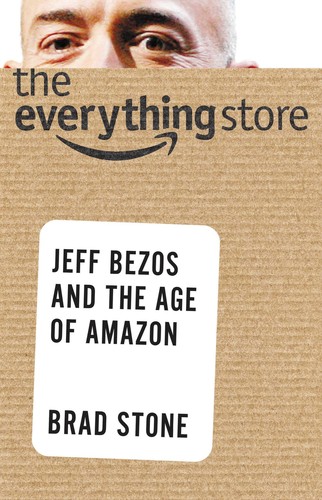
Journalist Brad Stone's independently reported history traces Amazon from an online bookstore to a genuine everything-store, covering Bezos's relentless customer obsession, willingness to sacrifice short-term profit for long-term position, and the demanding, sometimes brutal internal culture that came with it.
Independent reporting, and the one-star review
Bezos declined to be interviewed at length, and Amazon actively discouraged former employees from talking to Brad Stone. The book exists anyway because enough of them did, which gives it a texture unlike the authorised founder biographies: less interior monologue, more reconstructed detail cross-checked between witnesses, and a willingness to include episodes an approved account would have softened.
The clearest evidence of that independence is what happened afterwards — MacKenzie Bezos, then married to Jeff, posted a one-star review of the book on Amazon itself, disputing its accuracy and characterisation. It is a genuinely useful reading instruction: this is a well-sourced outside account of a company that did not want it written, which is both its value and the reason to hold individual scenes lightly.
Stone covers the ground from Bezos's time at the quantitative hedge fund D. E. Shaw, through the decision to leave — made using what Bezos calls the regret minimisation framework, projecting himself forward to eighty and asking which choice he would regret — and the drive west to Seattle in 1994, to a company selling more or less everything by 2013. The early chapters are the most enjoyable: a books-by-post operation run out of a garage and then a warehouse where staff knelt on concrete floors packing orders until somebody suggested packing tables.
Get big fast, and the flywheel
The strategic spine of the book is the decision to prioritise scale and position over near-term profit, held for far longer than public markets normally tolerate. Get Big Fast was the internal slogan of the late 1990s, and the company survived the dot-com collapse that took most of its peers — a period Stone covers well, including the magazine cover that pronounced the company doomed and the bond analyst whose critical report helped push the shares into single digits. Bezos's shareholder letters asked explicitly to be judged over a longer horizon than a quarter, and Stone shows this was not a lucky bet that happened to pay off but a position defended and re-argued repeatedly against genuine internal and external pressure to change course.
The mechanism underneath it is the flywheel, sketched with input from Jim Collins's work: lower prices bring more customers, more customers attract more third-party sellers, more sellers widen selection, wider selection and higher volume improve the cost structure, and the savings go back into lower prices. Push any part of the loop and it accelerates all the others. What makes it more than a diagram is that Amazon genuinely let it dictate decisions that looked irrational in isolation — cutting prices before competition forced it, and accepting margins that made analysts wince, because the loop paid back later and elsewhere.
Mechanisms, not intentions
The most transferable material in the book is Amazon's habit of turning principles into mechanisms — procedures that force the behaviour whether or not anyone feels like it that day. Customer obsession is the obvious example: rather than a values poster, it showed up as an empty chair kept in meetings to represent the customer, so that every proposal had to survive the question of what that chair would say. Ideas that were convenient for Amazon and worse for the customer had nowhere to hide.
The others are just as concrete. Slide decks were pushed out of senior meetings in favour of six-page written narratives, read in silence at the start of the meeting, on the grounds that bullet points let a weak argument pass as a strong one while prose exposes muddled thinking. Two-pizza teams — small enough to be fed by two pizzas — were an attempt to preserve autonomy and ownership as headcount grew, with each team owning its own metrics. And the metrics themselves were relentless: Stone's reporting describes a culture where an executive arriving at a meeting without command of the underlying numbers was in genuine trouble.
For a small business the specific mechanisms matter less than the principle behind them, which is that a stated value with no procedure attached is only a preference, and preferences lose to convenience under pressure. If you want something to survive a busy Tuesday, build a mechanism for it.
Standards, and the question-mark email
Two more Amazon habits get real attention, and both are portable. The first is the bar raiser: on any hiring panel, one trained interviewer from outside the hiring team holds a veto, and their brief is not to fill the vacancy but to protect the standard — the test being whether this candidate is better than the people already doing the job. It deliberately puts the long-term quality of the company above the short-term desperation of a manager who needs someone by Monday, which is precisely the pressure that degrades hiring in every growing business.
The second is the question-mark email. Bezos would forward a customer complaint to an executive with nothing added but a question mark, and the recipient was expected to drop everything, investigate the root cause, and come back with a written explanation of what had gone wrong and what would stop it recurring. Stone treats it as slightly terrifying and entirely effective: a single character that made an individual customer's bad experience into an organisational emergency. Alongside it runs a genuine streak of frugality — desks famously built from cheap doors, and an insistence that constraint breeds invention — and the Day 1 doctrine, the standing claim that the company must keep operating as though it were newly founded, because Day 2 is stasis followed by decline.
Stone closes with a piece of reporting that no authorised book would contain: he tracked down Bezos's biological father, Ted Jorgensen, running a bike shop in Arizona, who had no idea what had become of the son he had not seen since infancy. It is not business analysis at all, but it says something about the reporting standard the book set for itself.
Cannibalise yourself before somebody else does
The Kindle is the book's best illustration of the operating philosophy. Amazon's established, profitable business was selling physical books; Bezos set up the Lab126 hardware group and told the team, in effect, to build a device that would put the people who sell physical books out of a job — including Amazon's own booksellers. The hardware was expensive, the company had no track record in it, and the project was long and internally unpopular. The alternative was to let somebody else build it and own the transition.
Amazon Web Services gets similar treatment: infrastructure built to solve internal problems, turned into a product, launched years before competitors took cloud computing seriously, and run at deliberately thin margins to hold the position. Both stories point at the same discipline — a willingness to attack your own profitable line on your own terms rather than defend it until someone else takes the choice away from you.
What the intensity cost
Stone does not let the strategy stand without the bill. He documents the negotiating programme aimed at extracting better terms from smaller publishers, which insiders reportedly nicknamed after the way a cheetah singles out a weak gazelle — a name the lawyers made them change, and one that tells you plenty about the internal temperament. He reports on fulfilment centre conditions, on brutal internal debate, on a performance culture designed to be uncomfortable, and on the price war waged against the online nappy retailer Quidsi before Amazon acquired it.
The book's honest position is that it does not resolve whether the results required that intensity or merely accompanied it. Refusing to conclude is more credible than a tidy verdict would be, and it leaves the reader holding the genuinely hard question rather than a comfortable one.
Key lessons
- Genuine, sustained customer obsession — not just as a slogan — repeatedly drove decisions that sacrificed short-term profit for long-term position.
- A willingness to cannibalise your own successful products (the Kindle undercutting physical book sales) before a competitor does it to you.
- Long-term thinking, defended even against significant shareholder and market pressure, allowed Amazon to make bets that paid off over a much longer horizon than most public companies tolerate.
- An intensely demanding internal culture, documented here in detail, was both a genuine driver of the results and a real cost to employees.
Amazon's dominance came from genuinely sustained customer obsession and long-term thinking defended against real short-term pressure — not a single clever tactic, but a deliberately maintained operating philosophy over decades.
What this means for a UK small business
The empty chair scales down perfectly and costs nothing. In any pricing, process or policy decision, ask what the customer sitting in the room would say — it catches an enormous number of choices made for internal convenience and dressed up as customer benefit, from the phone system that saves you time and costs them ten minutes to the delivery window set around your van rather than their day.
The written-memo habit is the other cheap import. Requiring a page of prose rather than three bullets before a significant decision — a new hire, a price rise, a new service line — exposes thinking that has not actually been done. Most owners find the argument falls apart on the page before it falls apart in the market, which is the cheapest place for it to happen.
The cannibalisation principle applies to any UK firm with a comfortable, profitable line that a competitor could plausibly undercut with something cheaper or more automated. The uncomfortable move is often to do it to yourself first, while you still control the timing. But be realistic about the long-term-over-short-term thread: Amazon ran on patient capital and years of investor tolerance. A business funded by an overdraft with a personal guarantee behind it does not get that runway, and copying the patience without the funding is how firms go under looking profitable on paper.
What’s aged well
As history, the account remains a valuable, well-reported record; Amazon's continued relevance keeps it broadly current.
What feels outdated
Covers Amazon only up to 2013; the company has changed significantly since, so treat it as history rather than current commentary.
Where it falls short
The book stops in 2013, so it is history rather than an account of Amazon as it now exists — the subsequent antitrust scrutiny, marketplace seller disputes, warehouse unionisation efforts, the advertising business and the scale of AWS today all sit outside it. Anyone reading it as current commentary will draw dated conclusions.
As independent reporting it is more balanced than an authorised biography would have been, but it necessarily leans on the people who agreed to talk, which skews towards particular grievances and vantage points rather than a representative sample. Amazon disputed parts of it, most publicly through MacKenzie Bezos's own review. It is also long, and the middle chapters on acquisitions and executive churn drag in a way the origin story does not.
The Business Stuff verdict
A well-reported, independently sourced account — more balanced and critical than an authorised biography would have been.
Three things to actually do after reading it
- Identify one decision you're avoiding purely to protect short-term numbers at the expense of long-term position.
- Consider whether a successful product of yours needs to be cannibalised by your own next move before a competitor does it.
- Audit whether your internal culture's intensity is actually producing proportionate results, or just proportionate strain.
If you liked this, read next
Five similar books
- Steve Jobs (Walter Isaacson)
- Sam Walton: Made in America (Sam Walton)
- Titan (Ron Chernow)
- Elon Musk (Walter Isaacson)
- Losing My Virginity (Richard Branson)
Common questions
Is The Everything Store authorised by Amazon?
No, and that is the point of it. Bezos declined to be interviewed at length and Amazon actively discouraged former employees from talking to Brad Stone, who wrote it anyway because enough of them did. The result reads differently from an authorised biography: less interior monologue, more detail reconstructed and cross-checked between witnesses, and episodes an approved account would have softened. The clearest evidence of that independence is what happened afterwards — MacKenzie Bezos, then married to Jeff, posted a one-star review of the book on Amazon itself, disputing its accuracy. Read it as well-sourced outside reporting on a company that did not want it written, which is both its value and a reason to hold individual scenes lightly.
What is the Amazon flywheel?
A self-reinforcing loop, sketched with input from Jim Collins's work: lower prices bring more customers, more customers attract more third-party sellers, more sellers widen the selection, wider selection and higher volume improve the cost structure, and the savings go back into lower prices. Push any part of it and the whole thing accelerates. What makes it more than a diagram is that Amazon genuinely allowed it to override decisions that looked irrational on their own — cutting prices before competition forced it, and accepting margins analysts hated — because the return arrived later and somewhere else in the loop. For a small business the transferable question is whether your own advantages compound like that, or whether each one has to be won again every year.
Can a small business actually use Amazon's six-page memo rule?
Yes, and it is the cheapest thing in the book to steal. Amazon pushed slide decks out of senior meetings in favour of six-page written narratives, read in silence at the start of the meeting, on the grounds that bullet points let a weak argument pass while prose exposes muddled thinking. At small-business scale one page is plenty. Before a significant decision — a hire, a price rise, a new service line — make whoever is proposing it write the case in full sentences: what changes, what it costs, what has to be true for it to work, and what you would see if it were failing. Most weak proposals collapse on the page, which is by far the cheapest place for them to collapse.
Is the book out of date?
It stops in 2013, so treat it as history rather than commentary. Everything that has defined Amazon since — the antitrust scrutiny, the marketplace seller disputes, warehouse unionisation efforts, the enormous advertising business, and Amazon Web Services growing into the profit engine that funds much of the rest — is outside the book. What it remains excellent on is the founding logic: how the flywheel worked, why the company defended long-term position against a decade of shareholder pressure, and how a stated value gets turned into a mechanism that survives a busy week. Read it for that, and get the current picture of the company from somewhere written this decade.