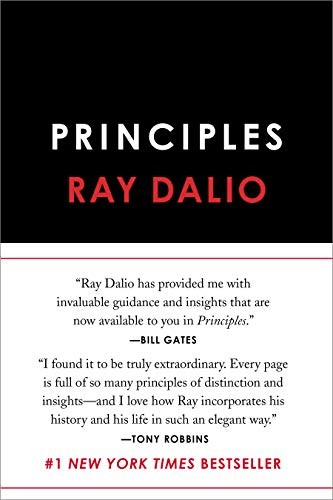
Dalio distils decades of running Bridgewater Associates into a systematic set of life and work principles, centred on 'radical truth' and 'radical transparency' — the idea that painful, honest confrontation of mistakes and disagreements, done consistently, produces far better decisions and a stronger culture than politeness or hierarchy.
The blow-up that made the book
Everything in Principles traces back to one humiliation. Dalio founded Bridgewater in 1975 out of his apartment. By 1982 he had convinced himself, and then loudly convinced everyone else, that Mexico's debt default would trigger a depression. He testified before Congress. He went on television and said it with total confidence. He positioned accordingly. And he was catastrophically, expensively wrong — the market bottomed almost exactly then and began one of the great bull runs. He lost so much that he had to let every employee go, ended up working alone again, and borrowed $4,000 from his father to keep the household going.
He describes it as the most painful and the most valuable thing that ever happened to him, because it replaced the question he had been asking himself — how do I know I'm right? — with a genuinely different one: how do I know I'm right? The whole architecture of the book is an attempt to build machinery around the fact that a very clever, very confident person can be completely wrong and not feel it at the time. That origin is worth knowing before you meet the rest of the system, because the system reads as eccentric until you understand it was designed by someone who had been publicly destroyed by his own conviction.
The book is in three uneven parts: a compact memoir, then Life Principles, then Work Principles, the last of which is essentially Bridgewater's operating manual reproduced at length.
The memoir also contains the most portable investing idea in the book, which Dalio calls the Holy Grail: if you can find fifteen or twenty return streams that are genuinely uncorrelated with each other, you can cut the risk of the whole portfolio dramatically without cutting the expected return. It is the insight that produced Bridgewater's All Weather fund and the risk-parity approach, and it generalises far beyond investing. A business with fifteen clients in one sector has one revenue stream wearing a disguise; a business with five clients across five sectors, on different contract cycles, is doing something structurally different with the same turnover. The question is never how many sources of income you have, it is how many of them fail at the same time.
Pain plus reflection equals progress, and the five-step process
Dalio's core loop is stated as an equation: pain plus reflection equals progress. Pain on its own teaches nothing — it just makes people avoid the thing that hurt. The value is only extracted if you force honest reflection on exactly what went wrong and why, and then convert the answer into a written principle that prevents the next ten mistakes of the same shape. He keeps his own mistake log, and Bridgewater runs an issue log as standard practice, on the argument that an organisation that quietly buries its errors is guaranteed to keep repeating them.
The engine for actually getting anywhere is his five-step process: have clear goals; identify and refuse to tolerate the problems standing between you and them; diagnose those problems accurately, getting to root causes rather than symptoms; design a plan that routes around them; and then do the unglamorous work of pushing the design through to a result.
The genuinely useful observation attached to it is that the five steps demand completely different aptitudes, and almost nobody is good at all five. The person who sets bold goals is rarely the person who diagnoses coldly. The diagnostician is rarely the one who grinds a plan through to completion. Dalio's conclusion is that you should identify honestly which steps you're weak at and staff around them, rather than assuming a competent person is competent at everything. For a small business owner that's a more practical piece of advice than most of what surrounds it: it explains why you keep setting goals and not reaching them, and it names the specific step you're dropping.
Radical truth, radical transparency, and believability weighting
Dalio's diagnosis of why organisations make bad decisions is that they run on a layer of polite fiction. People say what is safe in the room and what they actually think afterwards, in the car park. That double conversation is expensive: it hides the disagreements that would have improved the decision and lets weak thinking survive because nobody challenged it out loud.
He identifies two barriers to fixing it. The ego barrier is the part of you that experiences being wrong as a threat rather than as information. The blind spot barrier is that everybody has categories of thing they simply cannot see, and no amount of effort reveals them from the inside — only other people can. Radical open-mindedness means treating disagreement as the cheapest available way to find your own blind spots, which requires actively hunting for the most thoughtful person who disagrees with you rather than the most agreeable person who doesn't.
The mechanism that stops this collapsing into a shouting match is believability weighting, and it's the idea that most distinguishes Principles from a general call for honesty. Not all opinions count equally. Input is weighted by a person's demonstrated track record and quality of reasoning in that specific domain, tracked explicitly rather than settled by seniority or by pretending everyone's voice is identical. Bridgewater built software for it — the Dot Collector, where staff rate each other's contributions live during meetings, and baseball-card-style profiles of each person's attributes. Meetings are recorded. Criticising the founder on the record is not merely permitted but expected. Dalio's formulation is that an idea meritocracy equals radical truth plus radical transparency plus believability-weighted decision making, and that removing any one of the three collapses the other two.
Manage the machine, don't just work inside it
The last big idea is the most transferable. Dalio asks you to picture yourself standing above your business looking down at it as a machine: goals go in one end, outcomes come out the other, and the machine is made of a design and the people slotted into it. When an outcome disappoints, the question isn't 'who messed up' but 'which part of the machine produced this, and is the fault in the design or in the person filling the slot?' He is insistent about the order — design first, then match people to the design, rather than building the design around whoever you happen to have.
The related discipline is separating your two selves. There is the you who does the work inside the machine, and the you who stands outside designing it, and Dalio's claim is that most people spend almost all their time as the first and then wonder why the machine never improves. The designer's job is not to do the task better; it is to change the arrangement so the task comes out right without heroics.
This is coupled with a heavy emphasis on the fact that people are genuinely wired differently, which at Bridgewater means extensive personality assessment used to decide who belongs in which role rather than as an away-day exercise. Someone who is temperamentally a creative generator will not become a reliable detail-checker because you asked nicely, and pretending otherwise wastes years. He extends the same logic to hiring: hire people you would be happy to share your life with, because you will be spending it with them, and weight character and values above the specific skills on the CV, which are the easiest part to replace.
Underneath it all is the discipline of writing your principles down. Not a plaque in reception — a working document, taught deliberately to every new hire, revisited whenever a decision goes wrong, and rewritten when a principle fails. Dalio's own two-hundred-odd principles only cohere as a system because they're documented and debugged like software. Take nothing else from the book and this remains worth doing: the act of writing down how you actually decide converts implicit judgement into something you can improve, delegate and argue with.
Key lessons
- Radical transparency and radical truth — genuinely open disagreement and feedback, even uncomfortable — is presented as core to good decision-making at scale.
- Treat mistakes as data to learn from systematically, not as embarrassments to bury or avoid discussing.
- An 'idea meritocracy' — where the best argument wins regardless of hierarchy or seniority — requires deliberate structures to actually function.
- Writing down your own principles explicitly, and revisiting them, turns implicit judgement into a genuinely improvable system over time.
Systematically capturing your own decision-making principles, and radically confronting mistakes and disagreements rather than avoiding them, compounds into meaningfully better decisions over a career.
What this means for a UK small business
Full Bridgewater intensity will misfire in most UK teams. Recorded meetings and live public rating of colleagues sit badly with British workplace norms, and anything that reads as public humiliation is the sort of thing an employment tribunal takes a dim view of. Do not import the apparatus.
The transferable core is smaller, safer and genuinely valuable. Write down three or four operating principles you actually use — how you price, when you sack a client, what makes you say no to a job — and then say them out loud the next time the decision comes up, instead of reasoning from scratch and getting a different answer depending on your mood. Ask one person you trust what you are blind to, and treat the answer as data rather than as an attack.
The mistake log scales down cleanly too. A shared document where the team notes what went wrong on a job and what rule would have prevented it turns a lost customer into an asset instead of a memory everyone politely avoids. And the five-step process is worth running honestly once: most owners are strong on goals and weak on diagnosis, which is exactly why the same problem keeps coming back.
What’s aged well
The core arguments for transparency and systematised decision-making remain influential, though Bridgewater's specific culture has drawn its share of criticism.
What feels outdated
Long and dense; some readers find the specific Bridgewater implementation too intense to translate directly to a smaller business.
Where it falls short
It is long and it repeats itself — the Work Principles section in particular reads like an internal manual because that is what it is, and it was not written for a business with eleven staff. More importantly, the culture it describes has drawn serious criticism from former employees, and Rob Copeland's 2023 book The Fund alleged that the radical transparency ran mostly in one direction and that Dalio himself sat above it. Read the principles, but not as a template to copy wholesale. The book is also more comfortable describing what worked at a very large, very well-capitalised hedge fund than admitting how much of it depends on that scale and on a workforce self-selected for tolerating the intensity.
The Business Stuff verdict
A rigorous, demanding read — genuinely valuable for the thinking tools, even if you adopt a softer version of the culture than Dalio's own.
Three things to actually do after reading it
- Write down three of your own actual operating principles, explicitly, rather than leaving them implicit.
- Introduce one structured moment for open disagreement in your next team decision, regardless of hierarchy.
- Review a recent mistake as data for a written principle, rather than letting it pass without reflection.
If you liked this, read next
Five similar books
- High Output Management (Andy Grove)
- Radical Candor (Kim Scott)
- Thinking in Bets (Annie Duke)
- Measure What Matters (John Doerr)
- The Effective Executive (Peter Drucker)
Common questions
Do you have to read all 600 pages?
No, and most readers should not try. Principles comes in three parts: a short autobiography, then Life Principles, then Work Principles. The Life Principles section is the one worth reading properly — it carries the five-step process, radical open-mindedness, and pain plus reflection equals progress. Work Principles reads like what it is, an internal operating manual for a large hedge fund, and it is fair to skim it for the ideas you might actually use, such as believability weighting and separating the machine from the people in it. The autobiography is the most enjoyable third and the least instructive. Read part two properly, skim part three, and you have the book.
Is the Bridgewater culture credible given the criticism it has attracted?
Treat the principles as tools and the culture as contested. Former employees have described radical transparency as considerably harsher in practice than on the page, and Rob Copeland's 2023 book The Fund alleged that the openness ran mostly downward and that Dalio himself was largely exempt from it. None of that makes the underlying ideas worthless — writing down your decision rules, weighting opinions by track record rather than seniority, and treating errors as data are all sound regardless of who first wrote them down. It does mean you should not take the book as evidence that the full system works, and you should be wary of importing the intensity into a small team that never signed up for it.
Which idea is most useful for a business with ten staff?
The decision journal, taken from 'pain plus reflection equals progress'. Write down the significant calls you make — the hire, the price change, the client you took on — with what you expected to happen and why, then read them back in six months. Almost nobody does this, and it is the cheapest way to find out whether your judgement is actually good or just confident. The second most useful is believability weighting in its plain form: in any argument, ask who in the room has actually done this before and got it right, and give their view more weight than the loudest one. Both work at ten staff. Most of the rest does not.
Is this the same book as Principles for Dealing with the Changing World Order?
No, they are different books with a shared brand. The 2017 Principles, sometimes listed as Principles: Life and Work, is the one covered here — Dalio's personal and management rules drawn from running Bridgewater. Principles for Dealing with the Changing World Order, published in 2021, is a macroeconomic history book about the long cycles of empires, debt and reserve currencies, and has almost nothing to say about running a business. There is also Principles for Dealing with the Changing World Order's shorter offshoot material and an illustrated edition of the original. If you want the management content, make sure the cover says Life and Work.