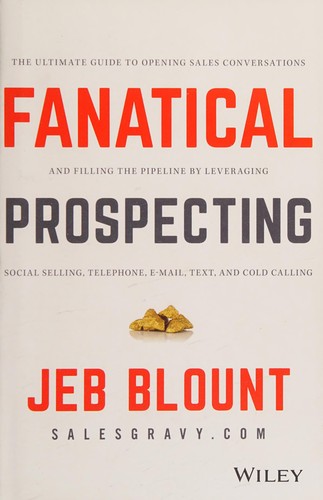
Blount's central argument is blunt: most sales problems are actually pipeline problems, caused by inconsistent prospecting, not a lack of skill closing deals that are already in motion. The book covers a wide range of prospecting channels (calls, email, social, referrals) with an emphasis on consistency over any single clever tactic.
The pipeline problem hiding behind every sales problem
Blount's central diagnosis is that most closing problems are prospecting problems in disguise. A quiet month rarely has a cause that started this month; it started three or four weeks earlier, when prospecting slipped because something more urgent turned up. By the time the pipeline is visibly empty, the fix is already weeks away, because new prospecting takes time to convert into revenue. That lag is the whole book, and it's why he treats prospecting as the one activity that must never be allowed to slip — precisely because its consequences are invisible until it's too late to fix them quickly.
Underneath sits what he calls the universal law of need: the more desperately you need a deal, the less likely you are to get it. Desperation is legible. It shows up in the discounting, the over-eagerness, the willingness to chase a prospect who was never going to buy, and buyers read it instantly and price accordingly. The only defence is a pipeline full enough that no single deal matters much, and the only way to get that is to prospect hardest when you least feel like you need to.
The 30-Day Rule and the Law of Replacement
Blount's two most quotable mechanisms are both about timing. The 30-Day Rule holds that the prospecting you do in any given month largely determines the results of the following month, not the current one — so a fortnight off is not a fortnight of lost activity, it's a hole that appears in your numbers a month later, by which point the cause has been forgotten and the effect gets blamed on the market. This explains the boom-bust cycle almost every self-employed person recognises: prospect hard when the diary is empty, stop the moment work comes in, panic six weeks later, repeat forever, and describe the whole thing as luck.
The Law of Replacement is the arithmetic that stops it. Deals leave your pipeline constantly — some won, most lost or stalled — so you need to know how many new opportunities have to enter the top for the pipeline to stay level. If it takes fifty conversations to produce ten qualified opportunities to produce one sale, then closing a deal doesn't mean you're ahead; it means fifty conversations need replacing. Blount's insistence on knowing your own ratios rather than a generic benchmark is what turns this from a slogan into a weekly number.
Balanced prospecting, not silver bullets
The book resists the temptation every sales-training book has to sell one miracle channel. Blount's argument is that a balanced methodology across telephone, email, social, referrals, networking and in-person outperforms mastery of any single channel, for two reasons: different buyers respond to different approaches, and any single channel's response rate decays as everyone piles into it. He's blunt that the people evangelising social selling as a replacement for the phone are usually selling social selling training, and equally blunt that anyone relying purely on cold email is one algorithm change from a very quiet quarter.
The corollary is a practical one about when you work. Blount separates the golden hours — the windows in which buyers are actually reachable — from everything else, and insists that admin, research, CRM updates and proposal writing get exiled outside them. Most people do the reverse, spending the reachable hours preparing to prospect and then discovering it's five o'clock. He's also good on the three habits that eat prospecting time while looking like work: procrastination, perfectionism, and the research spiral where an hour disappears into a prospect's website before a single call is made.
He is also clear that not every prospecting call has the same job, which sounds obvious and changes behaviour once you accept it. An outbound touch might exist to set an appointment, to gather qualifying information, to close a straightforward sale, or simply to build familiarity so the name isn't cold next time. Deciding which of those you're aiming at before you dial stops the most common failure mode — trying to sell the whole thing in ninety seconds to someone who has no idea who you are — and it makes the call feel less like an ordeal, because the bar for success is something achievable. Blount is equally blunt about list quality: no amount of skill rescues a badly targeted list, and the time spent working out precisely who is worth contacting pays back more than any script.
The telephone chapter, and what to say
The most immediately usable part of the book is its treatment of the outbound call, because Blount refuses to pretend it can be made comfortable and instead makes it short. His structure is five steps and takes under thirty seconds: get their attention by using their name, say who you are and where you're from, tell them exactly why you're calling, give a reason that connects to something plausibly true about their situation, then ask directly for what you want — usually a specific meeting time — and stop talking. The discipline is in the last part. Most people, having asked, immediately talk over the silence and unpick their own request.
Equally useful is his distinction between genuine objections and what he calls reflex responses or brush-offs — 'I'm in a meeting', 'send me some information', 'we're happy with our current supplier' — which are not decisions but reflexes deployed before the prospect has processed anything you said. Treating a reflex as a considered rejection is how most calls die. Blount's answer is to prepare turnaround scripts in advance and to use a ledge: a short holding phrase that buys you a second to think and keeps the conversation from ending on autopilot. He applies the same structural thinking to email, which he reduces to four parts — hook, relate, bridge, ask — on the basis that a message must first get delivered, then get opened, then get answered, and most sales emails fail at the second stage because they're written to impress rather than to be read on a phone in ten seconds.
The emotional cost, treated honestly
What lifts this above a technique manual is that Blount takes the emotional side seriously without getting sentimental about it. Prospecting means volunteering for rejection repeatedly, and the people who avoid it aren't lazy — they're avoiding a genuinely unpleasant feeling, in exactly the way any rational person avoids unpleasant feelings. His response is not to pretend it's fun but to shrink the window in which the feeling has to be endured: fixed blocks, an agreed number of dials, a defined finish, and a rule that you don't stop early because a call went badly.
He also names the disruptive emotions that turn a bad call into a bad week — fear before, frustration during, disappointment after — and treats managing them as a trainable skill rather than a character trait, which is the same conclusion much better-evidenced books on habit and attention reach by a different route. The overall message is unglamorous and correct: prospecting is not a cleverness problem, it's a consistency problem, and consistency is an emotional discipline before it is a tactical one.
Key lessons
- Most sales slumps are actually prospecting slumps from weeks earlier — the pipeline dries up before the results do.
- Consistent, scheduled prospecting time (not squeezed in when convenient) is what keeps a pipeline healthy.
- The '30-day rule': the prospecting you do this month determines your results roughly a month from now, not immediately.
- Multi-channel prospecting (calls, email, social, referrals) outperforms relying on a single channel.
A sales slump is rarely a closing problem — it's a prospecting problem from a few weeks earlier that's only now showing up.
What this means for a UK small business
The 30-Day Rule explains a pattern most UK owner-operators recognise but rarely name: a good quarter makes you stop chasing new work, and six or eight weeks later there are gaps in the diary nobody can account for. Blocking a fixed slot each week — even ninety minutes, treated with the same non-negotiable status as a client appointment — is the single most transferable idea in the book, and it costs nothing to start on Monday.
The Law of Replacement is worth doing as arithmetic rather than as a principle. Work out, from your own last twelve months, how many enquiries it takes to produce a quote and how many quotes to produce a job; multiply back from the number of jobs you need next quarter; divide by the weeks. That gives you a weekly contact target that survives a bad Tuesday, which a vague intention to do more marketing does not.
One adaptation for the UK: the channel mix here skews further towards referral, network and LinkedIn than Blount's American sales-floor examples suggest, particularly in trades and professional services where cold calling a small business owner often just reaches a voicemail. The principle — diversify rather than depend on one channel — holds; the specific weightings need translating.
What’s aged well
The core discipline argument remains sound, though some specific channel tactics (especially social) need updating for current platforms.
What feels outdated
Some of the social selling tactics reference platform features that have since changed.
Where it falls short
The book is repetitive by design — Blount restates the same core argument dozens of times across the chapters, which suits a training manual read in fragments but drags badly read cover to cover, and a determined editor could have removed a third of it without losing an idea. It is written for salaried salespeople with a manager and a CRM, so owner-operators have to translate throughout. Some of the social-selling and voicemail specifics reference platform norms that have shifted since 2015, and the relentless American sales-floor tone — big numbers, bigger self-belief — won't land with every UK reader.
The Business Stuff verdict
A useful discipline-focused reminder that pipeline problems are usually about consistency, not cleverness.
Three things to actually do after reading it
- Block a fixed, protected time each day purely for prospecting, treated as non-negotiable as a client meeting.
- Diversify your prospecting across at least two channels instead of relying on just one.
- Track prospecting activity, not just results, for a month to see the 30-day lag effect for yourself.
If you liked this, read next
Five similar books
- SPIN Selling (Neil Rackham)
- To Sell Is Human (Daniel Pink)
- The Challenger Sale (Dixon & Adamson)
- Exactly What to Say (Phil M. Jones)
- Gap Selling (Keenan)
Common questions
What is the 30-Day Rule, and why does it matter so much?
It is Blount's claim that the prospecting you do in any given month mostly determines the following month's results, not the current one. That lag is why sales feels like luck to so many people: you prospect hard when the diary is empty, work comes in, you stop, and six weeks later there are gaps nobody can explain — by which point the cause has been forgotten and the market gets the blame. The rule matters because it makes the boom-bust cycle predictable rather than mysterious, and predictable things can be fixed. The fix is unglamorous: a fixed weekly block that runs whether you feel you need it or not.
How much prospecting should I actually be doing?
Blount's answer is to derive it from your own ratios rather than copy a benchmark, and the arithmetic takes twenty minutes with last year's figures. Say a small firm needs 24 new jobs next year at an average value of £5,000. If roughly one quote in three converts, that is 72 quotes; if one conversation in four produces a quote, that is around 290 conversations, or six a week. Those numbers are illustrative and yours will differ — the point is that a weekly contact target survives a bad Tuesday in a way that a vague intention to do more marketing never does.
Is cold calling still worth it, or should I focus on LinkedIn and email?
Blount's whole argument is that this is the wrong question. His position is that a balanced approach across phone, email, social, referral and networking beats mastery of any single channel, for two reasons: different buyers respond to different approaches, and any one channel's response rate decays as everyone piles into it. He is pointed about the fact that people evangelising social selling as a replacement for the phone are usually selling social selling training. For UK readers the weighting genuinely differs from his American examples — referral and LinkedIn tend to do more work here, particularly in trades and professional services — but the principle of not depending on one channel holds.
Is this book useful if I am an owner rather than a salesperson?
Useful, but you will be translating throughout. It is written for salaried salespeople with a manager, a CRM and a territory, so the passages about pipeline reviews and quota pressure will not land. The parts that transfer directly are the discipline arguments — the 30-Day Rule, protecting the hours when buyers are actually reachable, and the honest treatment of why prospecting gets avoided. The telephone chapter is also worth the price on its own: a five-step call structure that takes under thirty seconds, and the distinction between a genuine objection and a reflex brush-off like 'send me some information', which is what kills most calls.